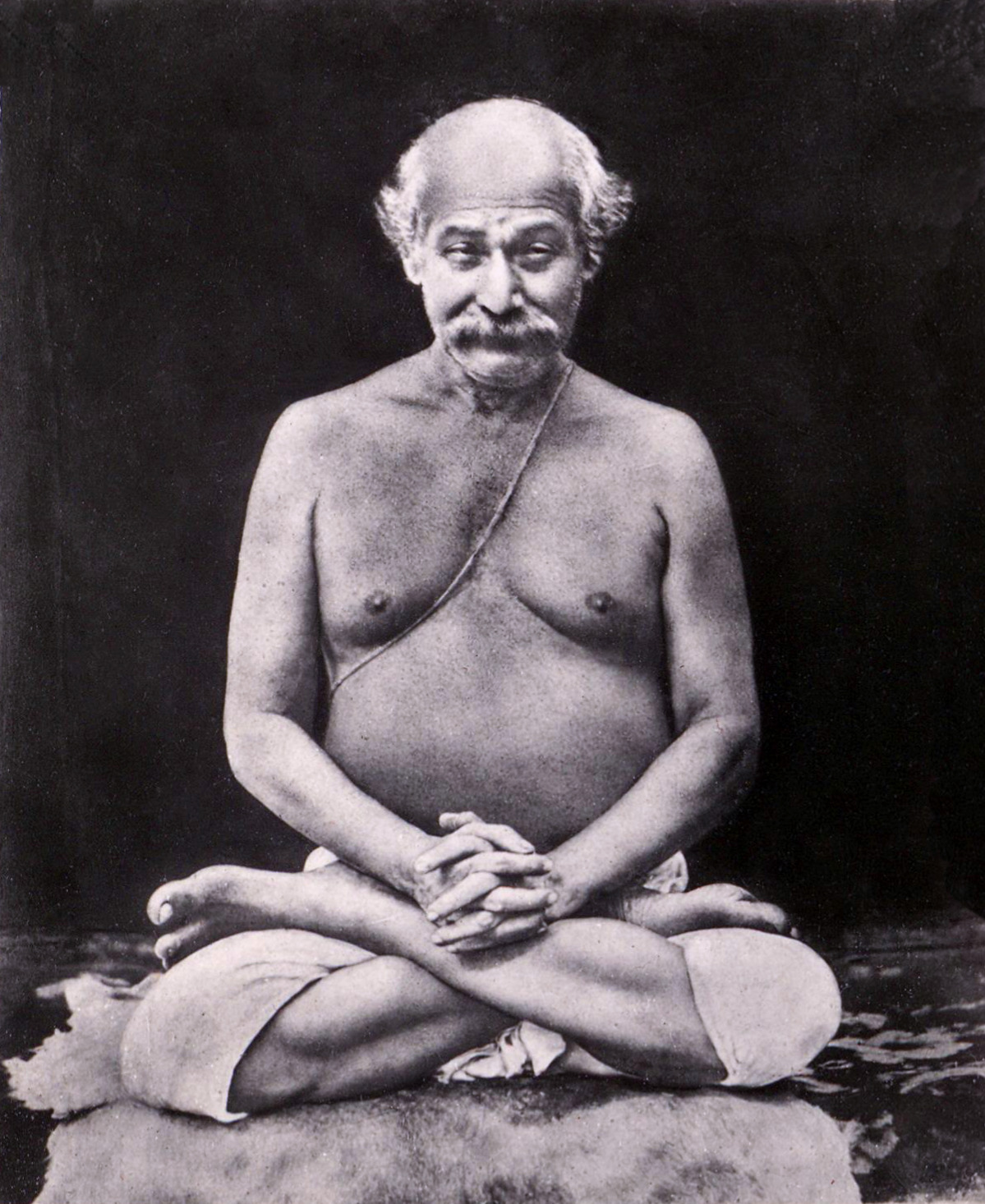
Who it is for
For people interested in Kriya Yoga as a practice for those with family and work, who can accept that his words reach us second-hand.
Life and places
- He was born on 30 September 1828 in the village of Ghurni in Bengal. 1
- In Autobiography of a Yogi he is quoted as saying that in the autumn of 1861 he was stationed in Danapur as a government accountant in the Military Engineering Department, and he was then transferred to Ranikhet. 4
- At the age of thirty-three, near Ranikhet in the Himalayan foothills, he was initiated into Kriya Yoga by Mahavatar Babaji. 1
- He was retired on a pension in 1886, twenty-five years after his initiation at Ranikhet. 5
Where to start
- Chapters 32 to 36 of Autobiography of a Yogi (1946, free online) are the most accessible account of his life and sayings. 2
Public context
Works
-
Complete Works of Lahiri Mahasay, Volume 1: Gitas and Sanghitas
Book · 2006 · The Sanskrit Classics
English translation of his Bengali commentaries on eight scriptures, read in the light of Kriya Yoga. Yogananda writes that disciples recorded and arranged his interpretations; the translator says Lahiri Mahasaya wrote the commentaries himself.
The short summaries are ours.
In their own words
Short passages in the words of Lahiri Mahasaya, each with its source. Where the quoted text is not in the language of this page, a translation follows and says whose it is.
-
Always remember that you belong to no one, and no one belongs to you.
Autobiography of a Yogi · Chapter 35 (The Christlike Life of Lahiri Mahasaya); 1946 edition · en.wikisource.org Recorded: Saying attributed to Lahiri Mahasaya as Paramahansa Yogananda gives it in Autobiography of a Yogi (1946). Yogananda was two years old when Lahiri Mahasaya died; he drew on Swami Satyananda's Bengali biography (1941) and accounts of disciples and does not name the source of this saying. -
He who has attained a state of calmness wherein his eyelids do not blink, has achieved Sambhabi Mudra.
Autobiography of a Yogi · Chapter 35, caption to the facsimile of his handwriting; 1946 edition · en.wikisource.org Quoted translation: Paramahansa Yogananda's English rendering of a line from a Bengali letter in Lahiri Mahasaya's own hand, reproduced in facsimile in the book, in which he interprets a Sanskrit verse; the Bengali was not checked.
Documented teaching relationships
-
Personal teacher of Swami Sri Yukteswar Giri
YSS specifically describes Sri Yukteswar as a personal disciple of Lahiri Mahasaya.
Biographical tradition · yssofindia.org
-
Personal encounter with Paramahansa Yogananda
In Autobiography of a Yogi, Paramahansa Yogananda gives his late mother's account that she carried him as a baby to Lahiri Mahasaya's home in Benares, where Lahiri Mahasaya seated him on his lap and blessed him.
Self-reported · gutenberg.org
Teaching relationships are documented statements. They confer no trust and do not attest realisation.
Sources
- Lahiri Mahasaya · Yogoda Satsanga Society of India Organisation in his lineage; biography accessed 10 Oct 2026
- Autobiography of a Yogi (1946) · Project Gutenberg eBook #7452 His own book; text of the 1946 first edition, transcribed by volunteers accessed 10 Oct 2026
- The Holy Science, SRF seventh edition (1972, printing 1977) · Internet Archive upload Scan of the SRF edition uploaded by a user; read for the passages and compared with a second scan of the same edition accessed 10 Oct 2026
- Autobiography of a Yogi, Chapter 34: Materializing a Palace in the Himalayas · Wikisource Volunteer transcription of the 1946 text by Yogananda; his own words as Yogananda reports them, about his post at Danapur and transfer to Ranikhet accessed 11 Oct 2026
- Autobiography of a Yogi, Chapter 35: The Christlike Life of Lahiri Mahasaya · Wikisource Volunteer transcription of the 1946 text by Yogananda, whose parents were his disciples; account of his later life in Benares accessed 11 Oct 2026
Compiled by us from the sources listed. Last checked 13 Oct 2026.
This description is factual. It contains no recommendation, ranking or assurance. Statements about effects are those of the respective source.